

If your closet is packed but nothing to wear feeling shows up often, you’re in the right place. This sustainable fashion guide for women gives you a practical path to dress well without chasing wasteful trends. You’ll learn how sustainable fashion works in real life, how to avoid hype, and how to build outfits that feel like “you” year after year.
Instead of buying trendy disposable items, you’ll focus on fit, fabric, and long wear. You’ll also discover small habits like washing less and repairing basics that quietly change everything. By the end, you’ll have a clearer plan for a calmer, smarter wardrobe that matches your values and your lifestyle.
What Sustainable Fashion Means for Women
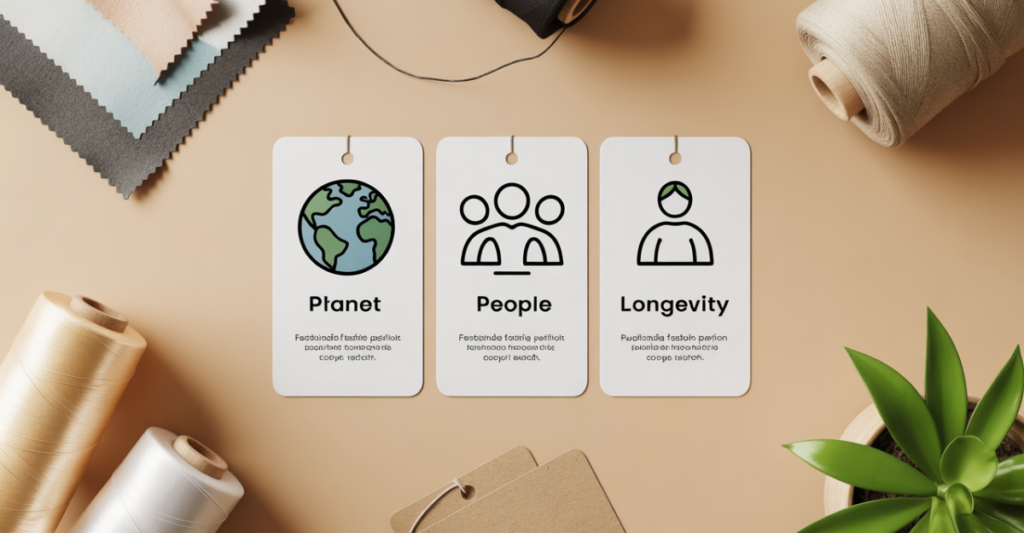
Start with a clear idea. Sustainable fashion for women means you choose clothes with a kinder garment life cycle. You consider the planet. You consider people. You also consider longevity. That’s the holistic approach behind real sustainable fashion. It supports environmental care and social fairness.
Next, keep it practical. ethical style means you look for fair wages and safe working conditions. conscious style / conscious consumer habits mean you buy less. You buy smarter. You also wear items longer. That’s how an eco-chic wardrobe / eco-friendly wardrobe becomes real, not just trendy.
Sustainable Fashion Guide for Women: Planet, Materials, Water, and Microfibers
Begin with what touches your skin. Organic materials can reduce harm when farms avoid pesticides / synthetic fertilizers. That supports soil health / farming methods. It also supports water consumption reduction in many farming systems. Textile Exchange tracks fiber production and the push toward better materials.
Watch the hidden problem too. Synthetic fibers can shed tiny strands. Those strands can reach water pollution pathways. They can move through rivers (toxic dye pollution) zones. Washing less helps. Choosing long-wear fibers helps more.
Why Sustainable Fashion Matters (Impact on Environment, Workers, and Your Wallet)
Feel the impact close to home. The US throws away huge volumes of textiles. EPA textile data shows how much ends up as trash over time. It also shows how little gets recovered. That reality connects to textile waste / landfills and local disposal costs.
Now look at your money. Fast trends drain budgets. They also drain attention. In this sustainable fashion guide for women, you’ll use cost per wear to spot “false bargains.” A cheap item that fails early costs more. You also lose time replacing it. That’s why buying less choice works well.
Sustainable Fashion Guide for Women Fact Check: Materials Growth and Emissions Pressure
Here’s a useful signal. Textile Exchange reports global fiber production hit an all-time high in 2023. That growth increases pressure on resources. It also links to rising impacts from material production. The big lesson stays simple. Material swaps help, but buying less helps more.
Many brands now market “eco” collections. However, climate progress needs deeper changes. McKinsey explains that decarbonizing fashion requires system shifts, not slogans. Use that as your filter when brands talk big.
How to Start: Audit Your Closet and Shop What You Already Own
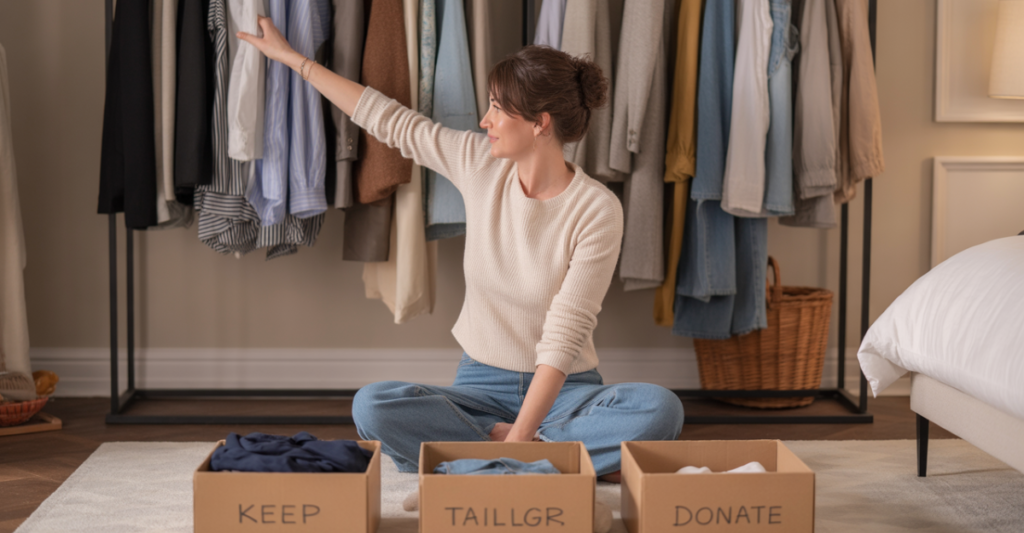
Start where you already own value. A closet audit / shop your closet first routine saves money fast. It also reduces waste fast. You identify duplicates. You find gaps. You also stop “panic shopping.” This step turns a messy closet into a curated closet / curated wardrobe.
Use a simple flow. Keep what fits and feels good. Repair what you love. Tailor what almost fits. Release what drains you. That keeps timeless pieces / timeless treasures in play. It also reduces disposable clothing / trendy disposable items shopping urges.
Garment life cycle diagram:
Buy or find → Wear → Care → Repair → Rewear → Resell/Donate → Recycle/Upcycle → Less waste
Sustainable Fashion Guide for Women Mini Case Study: The “Three Outfit Formula” Fix
Imagine a Chicago nurse named Maya. She felt that the closet was packed but nothing to wear stress weekly. She paused buying for one month. She built three outfit formulas using basics. Then she tailored two pants. Her spending dropped. Her outfits felt sharper. That’s meaningful choices in action.
She also learned one tiny skill. She could replace a button / fix a tear. That one habit extended her wardrobe. It also made shopping slower and calmer. That’s the slow fashion movement at a personal scale.
Smarter Buying Rules (Cost-Per-Wear, Quality Checks, Fit, and Tailoring)
Shop like a curator. Don’t shop like a slot machine. Use quality over quantity rules every time you buy. Check seams. Check fabric weight. Check how it bounces back after you stretch it. That points to durability / built to last. It also signals craftsmanship / high-quality craftsmanship.
Then make it non-negotiable. A great item that fits wrong sits unused. Fit also changes with life. Tailoring can rescue pieces. That supports a sustainable wardrobe because you keep items in rotation. You also reduce replacement cycles.
| Item | Price | Wears in a year | Years used | Total wears | cost per wear |
| Trend top | $25 | 6 | 1 | 6 | $4.17 |
| Quality tee | $45 | 30 | 3 | 90 | $0.50 |
| Leather boots | $150 | 60 | 4 | 240 | $0.63 |
Sustainable Fashion Guide for Women “Conscious Shopping Checklist” in One Table
Use this conscious shopping checklist before checkout. Ask if you can style it three ways. Ask if you can care for it easily. Ask if the brand shows the supply chain. That’s transparency (brand transparency) you can actually use.
| Check | What you look for | Why it matters |
| Fabric | Strong weave, no thin shine | Longer wear means fewer buys |
| Construction | Straight seams, secure buttons | Better durability / built to last |
| Fit | Comfort while moving | More wears, less regret |
| Brand info | Factory list or policy details | Better ethical style confidence |
| Care | Cold-wash friendly | Supports wash less and lower energy |
Fabrics & Materials Guide (Best Sustainable Fabrics, Innovations, and What to Avoid)
Materials matter, but context matters too. A fiber can look “green” yet still cause harm. Dyeing can add toxic dyes / chemical dyes risks. Farming can harm soil when farms rely on pesticides / synthetic fertilizers. That’s why the holistic approach beats one-word labels.
Use a simple rule. Choose fewer synthetics when possible. When you need performance, prefer recycled inputs. Look for transparency and credible certifications. Textile Exchange provides detailed materials tracking and industry signals.
| Material | Best use | Pros | Watch-outs |
| Organic cotton | Tees, underwear | Softer farming impacts | Still uses water in many regions |
| Linen / flax plant | Summer shirts, pants | Breathable, strong | Wrinkles easily, needs gentle storage |
| TENCEL™ Lyocell | Dresses, blouses | Smooth, drapes well | Quality varies by brand |
| Recycled polyester | Activewear | Reuses PET bottles / plastic bottles | Still sheds microfibers |
| rPET (recycled polyethylene terephthalate) | Jackets, fleeces | Uses recycled plastics / recycled fabric | Recycling limits exist |
Sustainable Fashion Guide for Women Innovation Note: Closed-Loop and Wood Pulp Fibers
Some newer fibers use wood pulp / eucalyptus trees and careful chemistry. Brands may claim a closed-loop production system. That can reduce solvent waste when done well. Still, you should ask for proof. Look for clear disclosures. Avoid vague “eco” claims with no numbers.
When brands explain inputs and outputs, trust grows. When they hide details, risk grows. That’s how you protect your eco-chic wardrobe / eco-friendly wardrobe from marketing fog.
Secondhand, Vintage, Rental, and Swaps (The Most Sustainable Ways to Shop)
I want the fastest sustainability win. Go circular. The secondhand market saves resources because the item already exists. Thrifting / consignment shops can offer great basics. Online resale platforms make it easier. You also find vintage finds that feel unique.
Make it social too. A clothes swap / swap with friends turns style into community. Rental can help for events. It avoids one-time purchases that sit unused. That reduces textiles out of landfills pressure. It also keeps your closet lighter.
Sustainable Fashion Guide for Women Tip: How Gen Z Women Drive Resale
Many Gen Z female consumers choose resale for value and identity. Research on Gen Z and secondhand shows strong interest in circular buying drivers. It often links to values and social norms. That gives resale real staying power. This shift changes the global apparel market too. Brands now compete with resale. That competition can push better quality. It can also push better transparency.
How to Spot Greenwashing (Label Reading, Red Flags, and Brand Transparency)
Green claims can mislead you. The FTC warns against broad claims like “eco-friendly” without specific proof. It asks marketers to qualify claims clearly. That makes labels less confusing when you know the rule. Start with the fabric label. It tells more truth than a hangtag slogan. Then check brand reporting. Do they publish supplier lists? Do they report progress? Fashion Revolution tracks transparency indicators across major brands.
“Broad, unqualified general environmental benefit claims” can mislead consumers.
Sustainable Fashion Guide for Women Certification Clues That Actually Help
Look for certifications / third-party labels that act like a seal of approval. GOTS (Global Organic Textile Standard) helps with organic fiber standards. Fair Trade Certified can support better labor conditions. B Corp Certification signals broader governance goals. These labels don’t solve everything, but they give you stronger signals than vague promises.
Also watch for the hard stuff. Brands should address child labor / forced labor risks. They should explain audits and remediation. Real transparency (brand transparency) includes uncomfortable details.
Build a Capsule Wardrobe (Timeless Anchors, Micro-Capsules, Seasonless Styling)
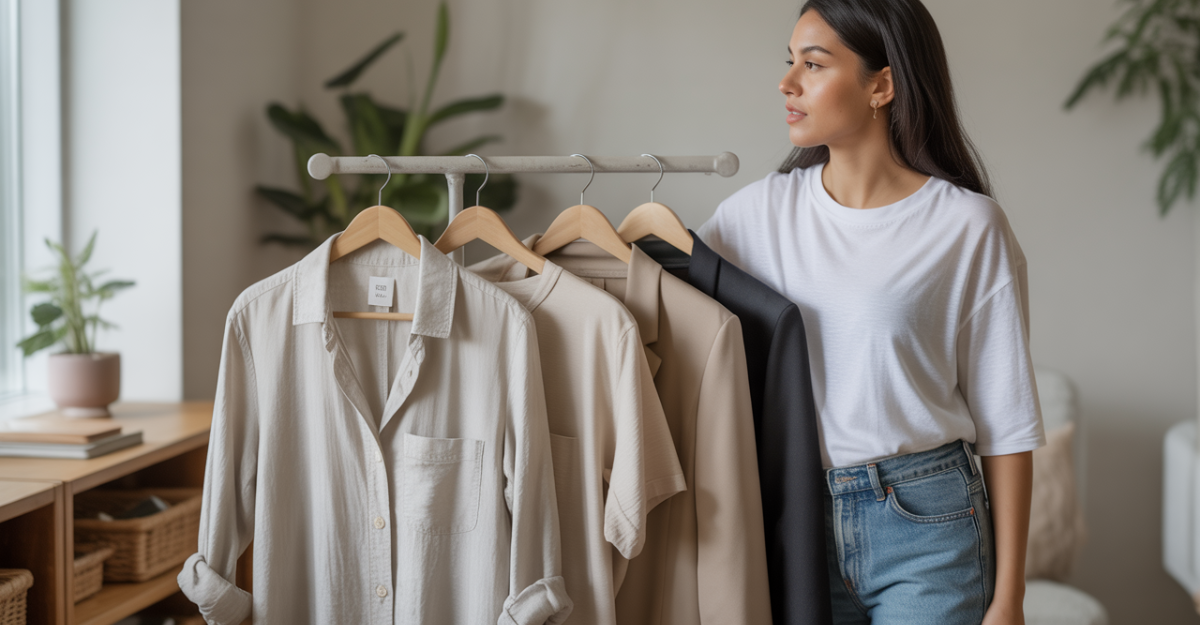
A capsule isn’t a uniform. It’s a strategy. The capsule wardrobe concept uses mix-and-match pieces so you dress faster. It reduces duplicates. It also keeps your style consistent. A small set of wardrobe essentials / core essentials does most of the work.
Choose anchors you love. Then build micro sets for work, weekend, and events. Use layering outfits to handle US seasons. Add accessories swaps (belt, scarf, statement necklace) for variety. That keeps outfits fresh without new purchases.
Sustainable Fashion Guide for Women Core Essentials Table
Use this as a quick guide. It helps you aim for timeless pieces / timeless treasures. It also protects you from trend churn. You still keep personality through color and texture.
| Category | Example | Why it earns a spot |
| Outer layer | Trench or wool coat | Works for years and upgrades outfits |
| Everyday base | Tee, tank, knit | High wear count boosts value |
| Bottom | Denim, tailored pants | Supports fit and repeat outfits |
| One-piece | Simple dress | Easy styling with layers |
| Shoes | Walkable boots or sneakers | Comfort increases real wear |
| Accessories | Belt, scarf, necklace | Makes repeats feel new |
Care, Repair & Laundry (Stain/Odor Strategy, Energy Saving, and Extending Clothing Life)
Laundry shapes longevity. Hot water and over-washing break fibers. They also fade color. Choose to wash less when you can. Spot clean first. Air out garments after wear. Then use cold water washing to reduce energy. This supports water consumption reduction and lower carbon emissions / carbon footprint over time.
Care also includes products and storage. Use eco-friendly detergents that avoid harsh chemicals. Store knits flat. Use proper storage / good hangers / fold sweaters habits so clothes keep shape. These small routines protect your sustainable wardrobe and make favorites last longer.
Sustainable Fashion Guide for Women Repair Basics Without Drama
Repair keeps clothes alive. Learn mending / simple mending with tiny steps. Fix seams early. Patch small holes early. Keep a needle and thread ready. You can even try DIY upcycling when an item can’t return to its old role. That keeps materials in use and reduces waste.
A repaired garment often feels more “yours.” It also keeps you aligned with ethical style. You buy fewer new items. You also respect the work of garment workers / artisans / farmers.
Responsible End-of-Life (Resell, Donate Right, Recycle, Upcycle , What Actually Works)
End-of-life choices matter. Donation isn’t a magic exit. Many items still end up trashed. EPA data shows textiles remain a major waste stream in the US system. That’s why responsible disposal matters. Choose the path based on condition. Resell quality items. Donate clean wearable items. Recycle when programs accept textiles. Upcycle worn cotton into rags. This reduces textiles out of landfills. It also closes the loop on the garment life cycle you started.
| Condition | Best option | Why it works |
| Like-new | Resell | Keeps value in circulation |
| Good, wearable | Donate properly | Helps others and reduces waste |
| Damaged, repairable | Repair or DIY upcycling | Extends use and saves resources |
| Too damaged | Textile recycling if available | Prevents landfill when systems exist |
Sustainable Fashion Guide for Women Closing Thought: The Goal Is Progress
This sustainable fashion guide for women doesn’t ask you to be perfect. It asks you to be consistent. Choose purpose over trends. Choose quality over quantity. Keep your wardrobe calm and intentional. Those habits protect your style and your budget. They also support a cleaner future for women in the fashion industry.
If you’d like, the next version can include a US-by-city resource section for textile recycling and clothing swaps, using local programs and verified links.