

- Introduction
In today’s fast-paced digital world, learning beginner friendly programming languages has become more important than ever. From mobile apps to websites and artificial intelligence, programming is at the core of almost every modern innovation. Whether you’re a student, professional, or entrepreneur, understanding beginner friendly programming can open doors to countless opportunities and career paths.
The demand for beginner friendly coding languages is rapidly increasing because more people are entering the tech field without prior experience. This is why choosing from the most beginner friendly programming languages is essential—it helps you learn faster, build confidence, and avoid unnecessary frustration. Instead of struggling with complex syntax, beginners can focus on logic and problem-solving using the best beginner friendly programming language suited to their goals.
Many learners often ask, what is the best beginner friendly programming language to start with. The answer depends on your interests, whether it’s web development, data analysis, or software engineering. Some learners explore options like r programming language for beginners, while others look into trends such as v programming language tutorial or even experiment with less common categories like x programming languages and z programming languages to understand broader concepts.
Additionally, with the rise of online learning, resources like r programming for beginners free courses and r programming for beginners youtube tutorials have made it easier than ever to get started. Some ambitious learners even challenge themselves with concepts like 7 programming languages in 7 days or explore multiple 7 coding languages to quickly gain exposure. However, it’s important to start with just 4 programming languages or fewer to avoid overwhelm and build a strong foundation.
2. What Makes a Programming Language Beginner-Friendly?
When starting your journey into coding, understanding what makes beginner friendly programming languages truly easy to learn is essential. Many learners feel overwhelmed at first, but choosing the right tools can simplify the process and make beginner friendly programming more enjoyable and effective. This section explains the key factors that define beginner friendly languages and how they help new programmers succeed.
Simple Syntax and Readability
One of the most important features of beginner friendly coding languages is simple and clear syntax. Languages that are easy to read allow beginners to focus on logic rather than complicated rules.
For example, the best beginner friendly programming language often uses straightforward commands that resemble everyday English. This reduces confusion and builds confidence early on. Whether you’re exploring 4 programming languages or planning to learn 7 coding languages, starting with simple syntax makes a big difference.
Strong Community Support
A strong community is another key factor behind most beginner friendly programming languages. When millions of developers use a language, it becomes easier to find help, tutorials, and solutions online.
Communities provide support through forums, blogs, and platforms like r programming for beginners youtube, where beginners can learn step by step. This support system makes even challenging concepts easier to understand.
Availability of Learning Resources
The availability of high-quality resources plays a major role in learning success. Many best beginner friendly coding languages come with free courses, documentation, and tutorials.
For instance, learners interested in data analysis can explore the r programming language for beginners, with plenty of r programming for beginners free materials available online. Similarly, those exploring newer tools can benefit from a v programming language tutorial to understand modern development approaches.
Real-World Applications and Demand
The true value of beginner friendly coding program options lies in their real-world use. A language becomes more useful when it is widely applied in industries like web development, data science, or app creation.
Beginners often ask, what is the best beginner friendly programming language for future careers. The answer depends on demand and usability. While popular choices dominate, some learners also explore niche areas like x programming languages or z programming languages to expand their knowledge.
If your goal is to grow quickly, you might challenge yourself with 7 programming languages in 7 days, but it’s always better to master one before moving on.
Final Thoughts on Selection
At the article will cover how choosing from the most beginner friendly programming languages can shape your learning journey. The right choice helps you stay motivated, build real projects, and eventually become confident in coding.
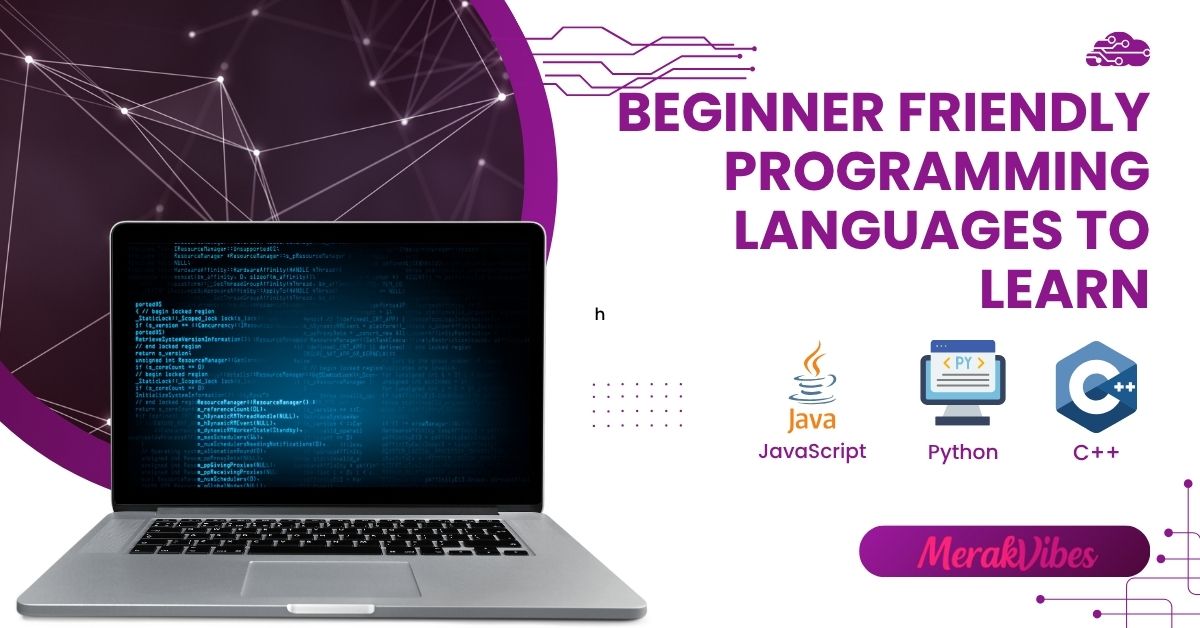
3. Top Beginner Friendly Programming Languages to Learn
In this section, we will explore some of the most beginner friendly programming languages that are widely recommended for new learners. Choosing from these beginner friendly programming languages can help you build a strong foundation and grow your skills step by step. As mentioned earlier, at the article will cover the best options based on ease, demand, and learning curve.
Python
Python is often ranked as the best beginner friendly programming language due to its simplicity and readability.
- Easy-to-read syntax that feels natural
- Popular for AI, web development, and automation
- Ideal for absolute beginners starting their journey in beginner friendly programming
Python is also considered one of the best beginner friendly coding languages because it allows learners to quickly build real-world projects.
JavaScript
JavaScript is a must-learn among beginner friendly coding languages, especially for web development.
- Essential for creating interactive websites
- Works directly in browsers with instant results
- Supports both frontend and backend development
If you’re planning to explore 7 coding languages, JavaScript should definitely be on your list due to its versatility.
Scratch
Scratch is a visual beginner friendly coding program designed for complete beginners.
- Uses drag-and-drop blocks instead of text-based code
- Perfect for kids and non-technical learners
- Helps understand logic without complexity
Among all beginner friendly languages, Scratch stands out for making coding fun and accessible.
Java
Java is a reliable option when learning structured programming.
- Focuses on object-oriented fundamentals
- Widely used in enterprise systems and Android apps
- Strong demand in the job market
It is often included when learners try 4 programming languages to understand core programming concepts.
C++
C++ is slightly more advanced but still valuable in the list of most beginner friendly programming languages for building logic.
- Provides a strong foundation in programming concepts
- Commonly used in game development
- Ideal for performance-based applications
Many learners include C++ in challenges like 7 programming languages in 7 days to strengthen their understanding.
Additional Learning Paths
Beyond these popular options, beginners can explore specialized areas:
- The r programming language for beginners is excellent for data analysis, with many r programming for beginners free courses available. You can also learn through r programming for beginners youtube tutorials.
- A modern approach can be explored through a v programming language tutorial, which focuses on speed and efficiency.
- Some learners also research niche topics like x programming languages and z programming languages to expand their exposure.
Final Insight
If you’re still wondering what is the best beginner friendly programming language, the answer depends on your goals. However, starting with well-known and best beginner friendly coding languages like Python or JavaScript is always a smart move.
By focusing on these beginner friendly programming languages, you can build confidence, gain practical skills, and gradually advance in your coding journey.
4. How to Choose the Right Language for You
Choosing the right option from the many beginner friendly programming languages can feel confusing at first. Every learner has different goals, time availability, and career plans. At the article will cover how to make a smart choice based on what truly matters, so your journey in beginner friendly programming becomes smooth and effective.
Based on Your Goals (Web, Apps, AI, Games)
Your goals play the biggest role in selecting from beginner friendly coding languages.
- If you want to build websites, go for languages used in web development
- For artificial intelligence and automation, choose tools that support those fields
- Game development requires strong logic-building languages
Some learners experiment with 4 programming languages to explore different paths, while others challenge themselves with 7 coding languages to gain broader exposure. However, focusing on one direction first is usually more effective.
You may also come across niche topics like x programming languages or z programming languages, but these are better explored after building a strong base.
Time Commitment and Learning Curve
Not all beginner friendly languages require the same amount of time to learn. Some are easier to pick up, while others need more dedication.
- Simple languages help you progress faster
- Complex languages build deeper understanding but take more time
- Consistency matters more than speed
Instead of rushing into challenges like 7 programming languages in 7 days, it’s better to choose a steady pace. Beginners can also benefit from structured resources like r programming for beginners youtube or r programming for beginners free courses when exploring the r programming language for beginners.
If you’re interested in modern tools, a v programming language tutorial can also be a good starting point.
Career Opportunities
When selecting the best beginner friendly programming language, it’s important to think about future career options.
- Choose languages with high industry demand
- Look for opportunities in web, mobile apps, or data science
- Focus on skills that match your long-term goals
Many of the most beginner friendly programming languages are widely used in real-world applications, making them valuable for job growth. This is why learners often search for what is the best beginner friendly programming language before starting.
Final Thoughts
Picking the right beginner friendly coding program is not about choosing the easiest option—it’s about choosing what fits your goals and future plans. By selecting from the best beginner friendly coding languages, you can build strong skills and move confidently toward advanced programming.
5. Benefits of Learning Beginner-Friendly Programming Languages
Learning beginner friendly programming languages offers a strong and smooth start for anyone entering the tech world. At the article will cover how these languages make the learning process easier, more practical, and more rewarding for beginners. Whether you choose from the most beginner friendly programming languages or explore different paths, the benefits remain valuable.
Faster Learning Progress
One of the biggest advantages of beginner friendly programming is quick progress. These languages are designed with simple rules and clear structure, allowing learners to understand concepts without confusion.
When working with beginner friendly coding languages, beginners can start building small projects early. This fast progress keeps motivation high and helps avoid frustration. Instead of struggling with complex syntax, you focus on logic and creativity.
Builds Confidence
Using beginner friendly languages helps build confidence step by step. As you complete small tasks and projects, your understanding improves naturally.
Many learners begin by exploring 4 programming languages to see what suits them best, while others experiment with 7 coding languages to expand their knowledge. Regardless of the approach, starting with easy tools creates a positive learning experience.
Resources like r programming for beginners youtube and r programming for beginners free tutorials also help learners feel supported when exploring the r programming language for beginners.
Easier Transition to Advanced Languages
Starting with the best beginner friendly programming language makes it easier to move toward more complex technologies later.
- Strong basics help in learning advanced concepts
- Logic-building becomes easier over time
- You can explore specialized areas confidently
Once you gain experience, you can move toward advanced or niche topics like x programming languages or z programming languages, or even follow structured challenges such as 7 programming languages in 7 days.
You can also explore modern tools through a v programming language tutorial, expanding your skill set further. This is why many experts recommend beginning with the best beginner friendly coding languages.
6. Common Mistakes Beginners Should Avoid
Even when learning beginner friendly programming languages, beginners often make mistakes that slow down their progress. Avoiding these can help you learn more efficiently.
Trying to Learn Multiple Languages at Once
Many beginners try to learn too many tools at the same time. While exploring most beginner friendly programming languages is helpful, focusing on one language first is more effective.
Jumping between multiple options—even if they are beginner friendly coding program choices—can lead to confusion and slow progress.
Ignoring Practice and Projects
Learning theory alone is not enough. Practical experience is essential in beginner friendly programming.
- Build small projects regularly
- Practice coding daily
- Apply what you learn immediately
Without practice, even the best beginner friendly programming language won’t help you grow.
Giving Up Too Early
One of the most common challenges is losing motivation. Many beginners quit before seeing results.
If you’re wondering what is the best beginner friendly programming language, remember that success depends more on consistency than the language itself. Every language takes time to master, even the easiest ones.
Final Thoughts
Choosing from beginner friendly programming languages is only the first step. The real success comes from consistent effort, practice, and patience. By avoiding common mistakes and focusing on the best beginner friendly coding languages, you can build a strong foundation and grow confidently in your programming journey.
7. Tips to Start Learning Programming Successfully
Starting your journey with beginner friendly programming languages becomes much easier when you follow the right approach. With proper guidance and consistency, anyone can succeed in beginner friendly programming and build valuable skills over time.
Use Online Platforms and Tutorials
One of the best ways to begin is by using online learning platforms and tutorials. Many beginner friendly coding languages come with free and paid resources that guide you step by step.
- Explore structured courses and documentation
- Watch tutorials like r programming for beginners youtube
- Access learning materials such as r programming for beginners free resources
- Try new tools through a v programming language tutorial
If you’re interested in data-focused learning, the r programming language for beginners is a great place to start.
Practice Daily with Small Projects
Practice is the key to mastering beginner friendly languages. Instead of only learning theory, apply your knowledge through small projects.
- Build simple applications
- Solve basic coding problems
- Experiment with different ideas
Even if you plan to explore 4 programming languages or challenge yourself with 7 coding languages, daily practice will help you improve faster. Avoid rushing into trends like 7 programming languages in 7 days without building a strong foundation first.
Join Communities and Forums
Being part of a community can greatly improve your learning experience. Many developers share knowledge, answer questions, and provide support.
- Join coding forums and discussion groups
- Ask questions and share your progress
- Learn from others’ experiences
Communities are especially helpful when working with most beginner friendly programming languages, as they offer guidance when you feel stuck.
8. Conclusion
Learning beginner friendly programming languages is one of the smartest steps you can take in today’s digital world. From Python to JavaScript and beyond, the best beginner friendly coding languages help you build a strong base and grow your skills with confidence.
If you’re still thinking about what is the best beginner friendly programming language, remember that the right choice depends on your goals. Start with one language, stay consistent, and focus on practice.
As you progress, you can explore more advanced areas, including niche topics like x programming languages and z programming languages. The key is not to rush but to learn step by step using the best beginner friendly programming language that suits your needs.
Stay consistent, keep practicing, and your journey in beginner friendly coding program development will lead you toward success.
10. FAQs
Which programming language is easiest for beginners?
The easiest option usually comes from beginner friendly programming languages that focus on simplicity and readability. Many learners consider Python as the best beginner friendly programming language because it is easy to understand and widely used.
However, the answer to what is the best beginner friendly programming language can vary depending on your goals. Some learners prefer visual tools or simple scripting options, especially when starting with beginner friendly coding languages.
Can I learn programming without a technical background?
Yes, absolutely. You don’t need a technical background to start beginner friendly programming. Many beginner friendly languages are designed for people with no prior experience.
You can begin with a beginner friendly coding program and gradually build your understanding. Resources like r programming for beginners youtube and r programming for beginners free courses make it even easier to learn the r programming language for beginners without any technical knowledge.
How long does it take to learn a programming language?
The time required depends on your consistency, learning method, and the language you choose from the most beginner friendly programming languages.
- Basic understanding can take a few weeks
- Practical skills may take a few months
- Mastery requires continuous learning
Some learners try challenges like 7 programming languages in 7 days, but it’s more effective to focus on one language at a time. Even if you explore 4 programming languages or 7 coding languages, steady practice is the key to success.
You can also explore modern tools through a v programming language tutorial once you understand the basics.
Is Python better than JavaScript for beginners?
Both are part of the best beginner friendly coding languages, but the choice depends on your goals.
- Python is ideal for simplicity and beginners
- JavaScript is essential for web development
If your goal is ease of learning, Python is often seen as the best beginner friendly programming language. However, if you want to build websites, JavaScript is equally important.